
Expand what you can measure.
Advanced nanoparticle reagents for mass cytometry, spectral flow cytometry, and magnetic cell separation.
Core Quantum Technologies develops advanced nanoparticle reagents that expand the capabilities of mass cytometry, spectral flow cytometry, and magnetic cell separation—giving researchers new ways to detect, measure, and analyze cells.
Our technology
One platform. Four payloads. More possibilities.
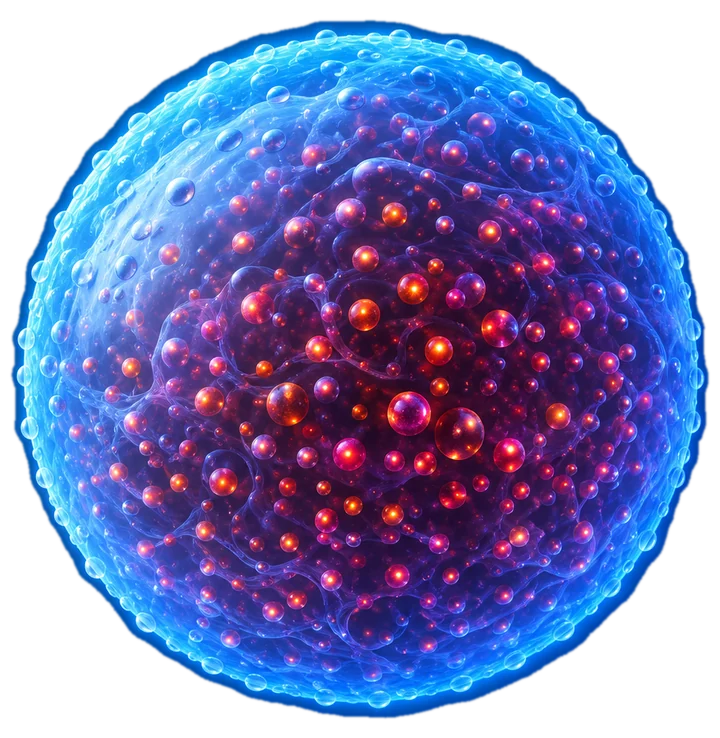
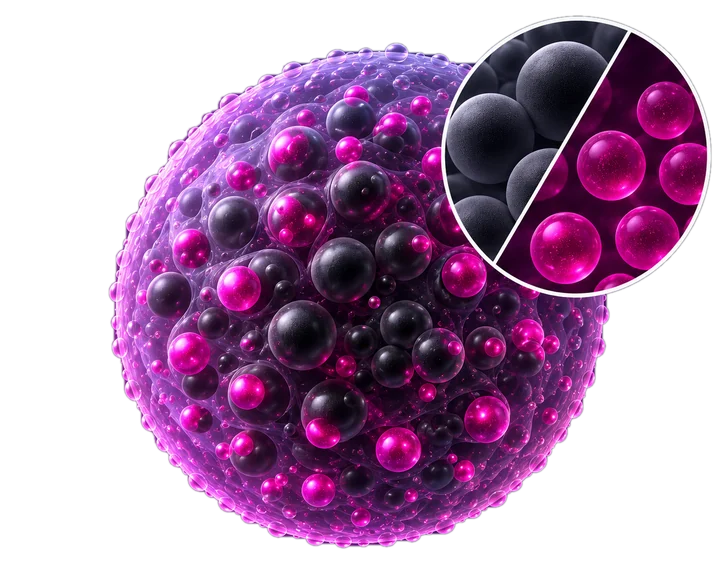
Our proprietary polymer encapsulation platform enables highly loaded, application-specific nanoparticles by incorporating different functional materials. The same core technology can be configured with metal, fluorescent, magnetic, or dual magnetic-fluorescent payloads to meet the needs of diverse research applications.
CQT nanoparticle platform
A polymer-based nanoparticle with a high loading capacity that can be engineered with different functional payloads.
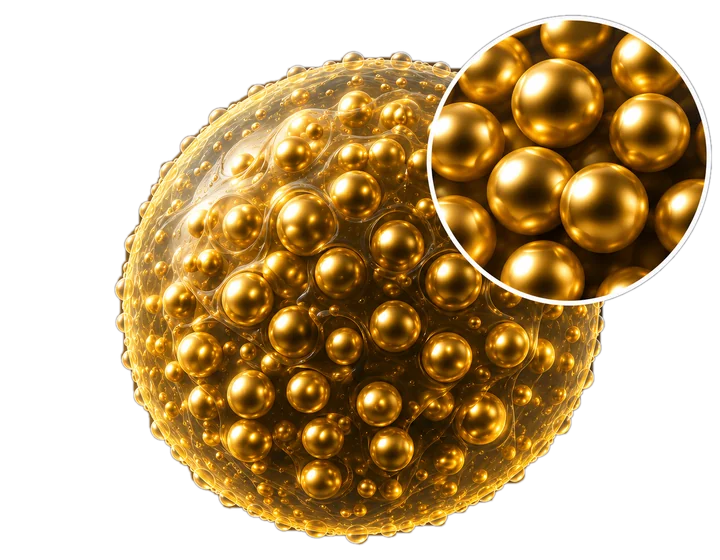
Metal payload
Mass cytometry
Highly loaded metal nanoparticles designed to introduce new detection channels and expand high-dimensional mass cytometry panels without disrupting existing workflows.
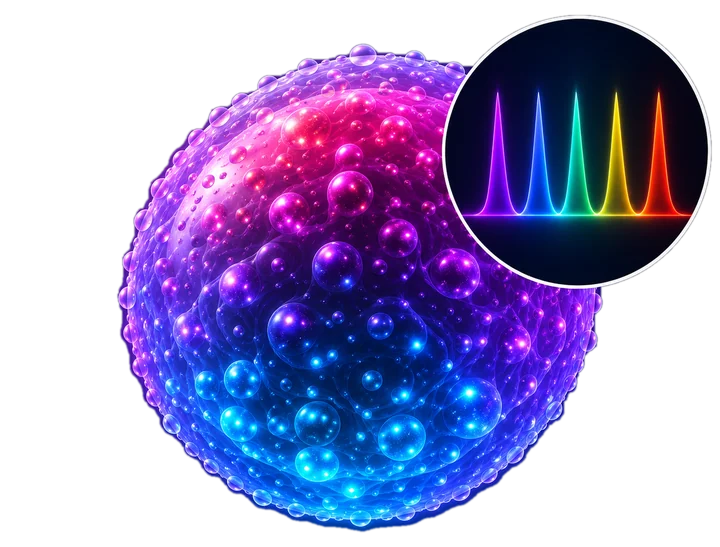
Fluorescent payload
Spectral flow cytometry
Engineered fluorescent nanoparticles with narrow emission profiles spanning 420–900 nm, designed to improve spectral resolution, support reliable unmixing, and expand high-dimensional panels.
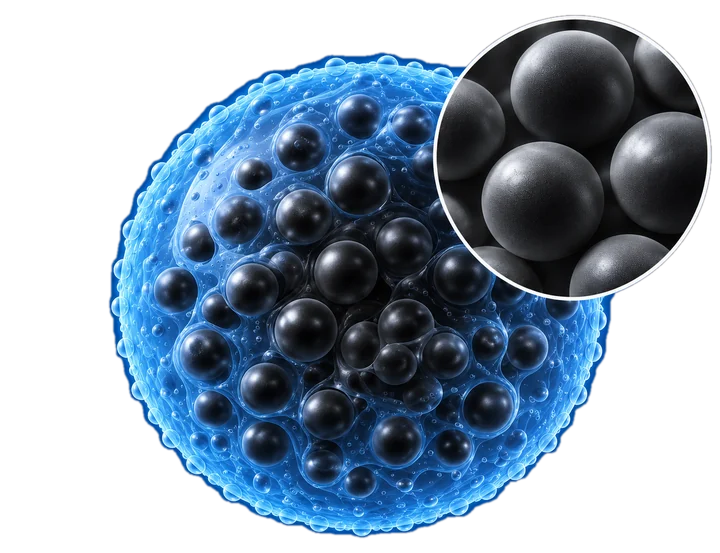
Magnetic payload
Magnetic cell separation
Engineered magnetic nanoparticles designed for targeted cell enrichment and depletion, enabling efficient isolation of cell populations for downstream analysis.
Magnetic + fluorescent payload
MagDots: dual function
Dual magnetic-fluorescent nanoparticles that combine magnetic cell enrichment with direct fluorescent detection, streamlining cell separation and downstream analysis.

High loading capacity
Enables strong signals and expanded detection channels

Versatile platform
Same core nanoparticle technology with configurable payloads

Application-specific design
Optimized for performance across multiple workflows

Seamless integration
Designed to work with existing instruments and workflows
10
Emission channels, 420–900 nm
4
Reagent families: MultiDot, MagDot, SpiDot, IsoDot
I + II
NSF SBIR phases awarded
2012
Founded at The Ohio State University
Performance spotlight
Expand the mass cytometry metal landscape.
IsoDots are highly loaded metal nanoparticles designed to introduce additional detection channels and expand high-dimensional mass cytometry panels while maintaining compatibility with established workflows.

IsoDots
Highly loaded metal nanoparticles for mass cytometry
Expanded metal offerings
IsoDots in action: 197Au detection of CD4, CD8 and CD19
Expand your panel. Keep your dyes.
MultiDots combine narrow emission profiles with distinct excitation characteristics, creating additional spectral options that can be incorporated into existing panels without requiring wholesale replacement of established fluorophores.

MultiDots
Narrow emission peaks from violet to deep red
Catalog emission peaks, 420 to 700 nm
Same emission colour, different excitation and detector channels

Use alongside existing dyes
Similar emission colours with distinct excitation and detector channels

Narrow emission profiles
Engineered for minimal spectral overlap and improved unmixing

More panel flexibility
Add markers without replacing fluorophores you already use
Broad spectral range
Emission colours from 420 to 900 nm to support high-dimensional panels
Customizable magnetic particles for cell and EV separation.
SpiDots are high-performance magnetic nanoparticles designed for efficient cell separation. Customizable surface chemistry enables broad applications from simple enrichment to complex workflows.

SpiDots
Magnetic nanoparticles for cell and EV separation

Cell enrichment
Efficient positive selection or depletion of targeted cells for downstream analysis.

Extracellular vesicle (EV) separation
Isolate and enrich EVs with customizable surface chemistry for RNA, protein, or functional studies.

Flexible conjugation
Customizable surface chemistry for antibodies, proteins, or other ligands.

High separation efficiency
Strong magnetic cores enable rapid and effective enrichment or depletion
Customizable surface chemistry
Flexible conjugation for antibodies, proteins, or other binding reagents
Broad applications
Cell isolation, depletion, extracellular vesicle (EV) enrichment, yeast display, and more

Seamless workflow integration
Compatible with standard magnetic separation systems and downstream analyses
Dual-function nanoparticles for enrichment and analysis.
MagDots combine a strong magnetic core with a bright, narrow fluorescent emission, enabling efficient cell or EV enrichment with integrated downstream analysis by flow cytometry or imaging.

MagDots
Magnetic core, fluorescent shell, one particle
Catalog emission peaks, 580 to 700 nm
MagDot 610 CD4 positive selection of CD4+ cells using a Miltenyi MS magnet
Efficient enrichment
Strong magnetic core enables efficient positive selection or depletion of targeted cells
Bright, narrow emissions
Five distinct fluorescent colours for easy integration into existing spectral flow panels
Cells and EVs
Isolate and enrich cells or extracellular vesicles (EVs) for downstream analysis
Custom conjugation
Flexible surface chemistry for antibodies, proteins, or other ligands
“Core Quantum’s expertise was instrumental in establishing our lab’s workflow. Their custom MagDot conjugations for our detection and enrichment antibodies worked seamlessly with our spectral cytometer to analyze Th17 cells bound to Nanovials. Without the high-quality service and innovative MagDots, our Th17 enrichment protocol would not have been possible. Thanks to the dual fluorescent and magnetic properties of the MagDots, we quickly validated our findings and are now uncovering new biology for Th17 cells that we can identify and isolate by protein expression. Core Quantum’s support has been invaluable in advancing our research.”
Dequina Nicholas, PhDAssistant Professor, University of California Irvine, Molecular Biology and Biochemistry Department
What could you measure with our nanoparticles?
Whether you’re expanding a mass cytometry panel, building a spectral flow assay, or simplifying a cell separation workflow, our scientists can help determine how Core Quantum’s nanoparticle platform can support your research.